

As part of a significant military posture shift in the Middle East, the United States has announced the deployment of a third aircraft carrier strike group to the region amid escalating tensions with Iran. The USS Gerald R. Ford, currently stationed in Norfolk, Virginia, is preparing to move toward the Mediterranean Sea, placing it within operational reach of U.S. Central Command (CENTCOM).
This movement is in addition to the USS Carl Vinson, currently deployed in the Arabian Sea, and the USS Nimitz, which is heading west through the Strait of Malacca.
A Show of US Power
Each carrier strike group is a formidable presence, typically comprising:
An aircraft carrier equipped with F/A-18 Super Hornets
An accompanying air wing (some with F-35 Lightning II strike fighters)
At least one attack submarine
A cruiser
Multiple guided missile destroyers
This combined force enhances regional air defense capabilities and land-attack potential, while also providing anti-drone, anti-aircraft, and anti-ballistic missile systems. Notably, USS The Sullivans and USS Arleigh Burke recently engaged in intercept operations to defend against Iranian ballistic missile attacks on Israel, successfully neutralizing threats in coordination with CENTCOM assets.
The USS Gerald R. Ford — a next-generation aircraft carrier known for its advanced electromagnetic catapults and improved sortie rates — has now completed its post-deployment refit and training cycle. According to U.S. Navy sources, this deployment is part of a “regularly scheduled” operation, though its strategic implications are far-reaching.
What Does This Mean for Global Trade and Shipping?
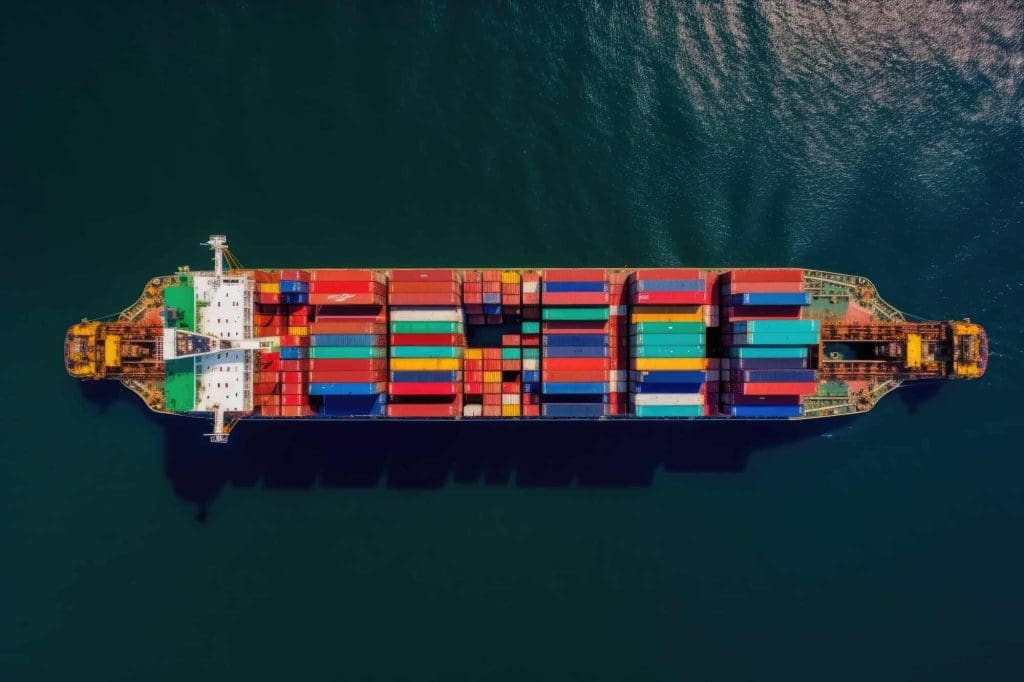
While this is fundamentally a defense operation, logistics professionals and global shippers should take note of the broader implications:
Increased military traffic through critical maritime corridors such as the Suez Canal and the Strait of Hormuz could lead to rerouting, delays, or enhanced security checks.
The heightened geopolitical tension may impact insurance costs for vessels operating in or near affected zones.
Certain shipping lanes may be classified as high-risk, requiring carriers to adjust transit times or reroute entirely.
Breakbulk and military-support cargo, including spare parts, defense equipment, and infrastructure, may increase as allied nations prepare for potential contingencies.
At ICS Global Logistics, we continuously monitor global events that impact freight movement. Whether it’s military activity, trade policy changes, or port disruptions, our team is committed to providing strategic insight and flexible logistics solutions to help clients navigate uncertainty.
Need help managing routes or cargo in sensitive regions?
Let’s talk. ICS Global Logistics offers proactive, real-time freight strategies that keep your supply chain moving — even in unpredictable times.
Strategies for Business Owners and Supply Chain Managers
Business owners and supply chain managers need effective strategies to navigate these challenging times. Proactive planning and adaptation are keys to overcoming disruptions. Implementing strategic changes can help mitigate the impact on logistics operations.
One essential strategy is diversifying supply chain routes. By not relying solely on one path, businesses can reduce their risk exposure. This approach ensures continuity even when preferred routes face disruptions.
Investing in real-time tracking systems enhances operational transparency. Such systems allow managers to monitor shipments closely. Prompt action can be taken in case of any deviations from scheduled paths.
Additionally, strengthening relationships with logistics partners is crucial. A robust network of reliable partners provides support in uncertain times. Important strategies include:
- Regularly reviewing and updating contingency plans.
- Diversifying logistics options with air, sea, and road transportation.
- Building and maintaining strong connections with freight forwarders and brokers.
For detailed guidance on freight solutions, reaching out to our team at ICS Global Logistics for tailored advice. Contact our team via email at ics@icsgloballogistics.com. For direct inquiries, you can call us on (07) 3387 9500.